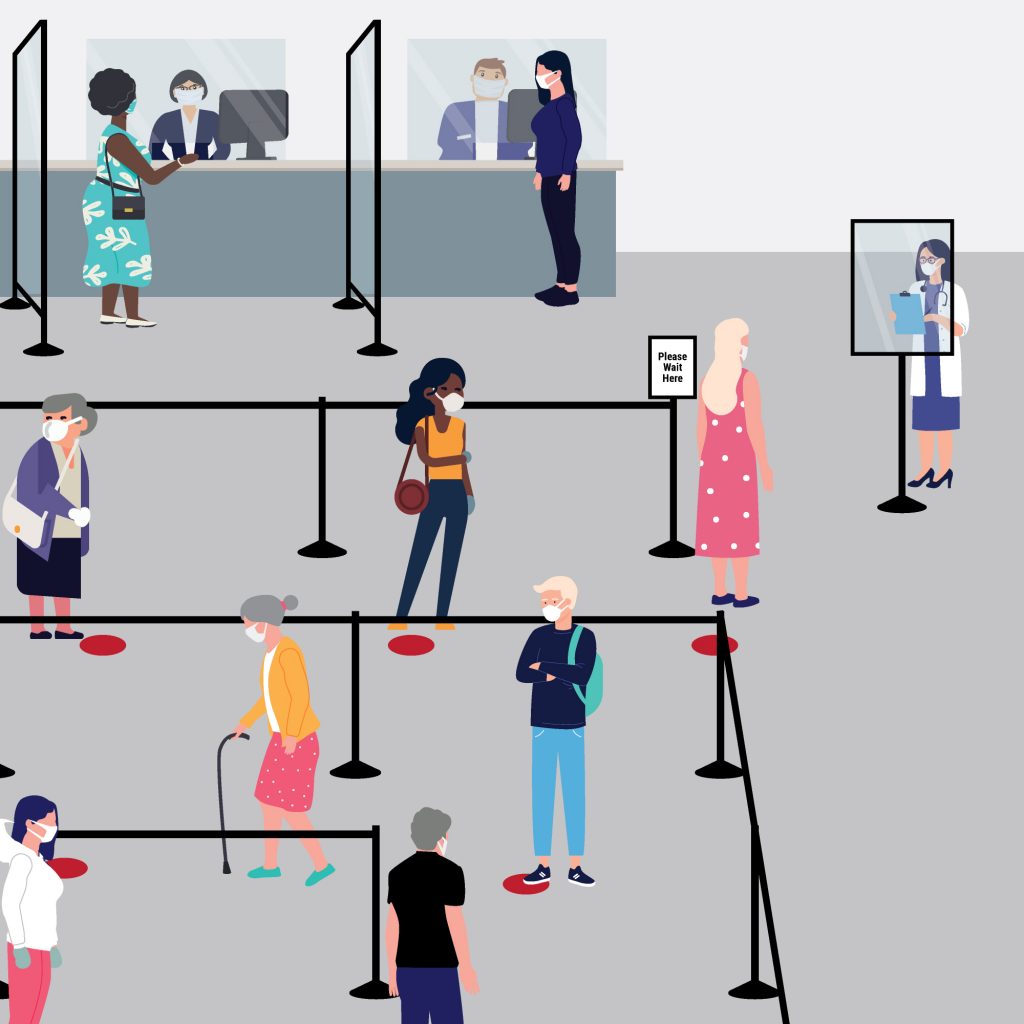
Crowd Flow Dynamics: Matching Queue Style to Demand

Effective queue management starts with understanding crowd flow dynamics—how people move through space over time. One of the most impactful, and often overlooked, decisions in queue design is matching the queue style to expected demand.
Crowd Control for Awkward Spaces: Solving Irregular Layouts with Smart Queue Design

Have an awkward or unconventional space? Learn how Visiontron solves complex crowd control challenges using custom stanchions, wall-mounted barriers, signage, and engineered queue layouts.
Retractable Belt Stanchions vs Wall-Mounted Units | When to Use Each (and Both)

Compare retractable belt stanchions vs wall-mounted retractable belt units by floor space, belt length, indoor/outdoor use, customization, and real-world scenarios. Learn when to use each and how combining both creates a best-of-both-worlds setup.
Industrial Safety Barriers & Signage | Systems for Warehouses & Facilities

Discover how RETRACTA-BELT® stanchions, wall-mounted barriers, safety signage, rigid barricades, and custom solutions help industrial facilities reduce risk, control access, and improve operations.
Stadium Crowd Control, Queueing, and Signage: Planning for Larger Venues

Planning a stadium or arena is about more than seating capacity and aesthetics. A well-designed stadium crowd control and signage plan helps manage entry queues, reduce concourse congestion, support premium access zones, and improve overall guest flow from curb to seat (and back again).
Security Screening Queue Design: Reduce Bottlenecks

Learn how screening portals shift delays across the checkpoint. Use queue-zone planning to reduce bottlenecks through space, staffing, and flow.
Queue Rules Nobody Talks About (But They Should)

Queue setups should follow accessibility and safety guidelines, including ADA protruding object limits, clear egress paths, and queue flow planning for peak demand. Even when not legally required, these practices create safer, more universally accessible queues for all guests.
Cast Iron vs. Cement Bases for Crowd Control Stanchions, which should you choose?

Cast iron and cement stanchion bases can have similar finished weights, but they perform differently over time. Cast iron stanchion bases offer greater durability and resistance to leaning through dense material and self-aligning connection technology, making them ideal for high-traffic environments. Cement stanchion bases provide a lower-cost alternative for lighter-duty or temporary applications when engineered with reinforced construction and proper connection design.
These base options are available across Visiontron’s RETRACTA-BELT® stanchion systems, allowing facilities to select the right foundation based on traffic demands, environment, and budget.
Classic Post & Rope: Easy Spacing Guide

Classic Posts & Ropes aren’t just crowd control—they’re atmosphere. Set them up right, and they instantly make a space feel organized, elegant, and welcoming. Set them up wrong… well, people get creative in ways you’d rather they didn’t. Here’s a quick look at how rope height affects both the flow and the feel of your space.
Magnetic Base Stanchion Mounts: A Fast, Flexible, Floor-Friendly Crowd Control and Queueing Solution

Discover how Visiontron’s ORIGINAL Magnetic Base Mount delivers strong, floor-safe stability for RETRACTA-BELT® stanchions. Learn the benefits, installation options, and why it’s the smart choice for flexible crowd control layouts.
Elevate Your Messaging: Why Visiontron’s Designer Series Sign Frames Stand Apart

Signage isn’t just about giving directions — it’s part of your brand experience. Every sign is an opportunity to reinforce your message, set expectations, and elevate the look of your space. Visiontron’s Designer Series Sign Frames deliver that and more, combining U.S.-made craftsmanship, quick-change convenience, and outdoor-ready durability in one premium frame.
Magnetic Belt Ends – Smarter, Safer Egress in Queues

Traditional belt ends are designed to lock securely into place—great for daily operations, but not ideal in an emergency. In fast-moving crowd situations like fire alarms, false security threats, or panic events, passengers don’t calmly unclip belt ends; they push through. Locked stanchions can slow evacuations, create bottlenecks, or even become tripping hazards.